

Читать по-русски
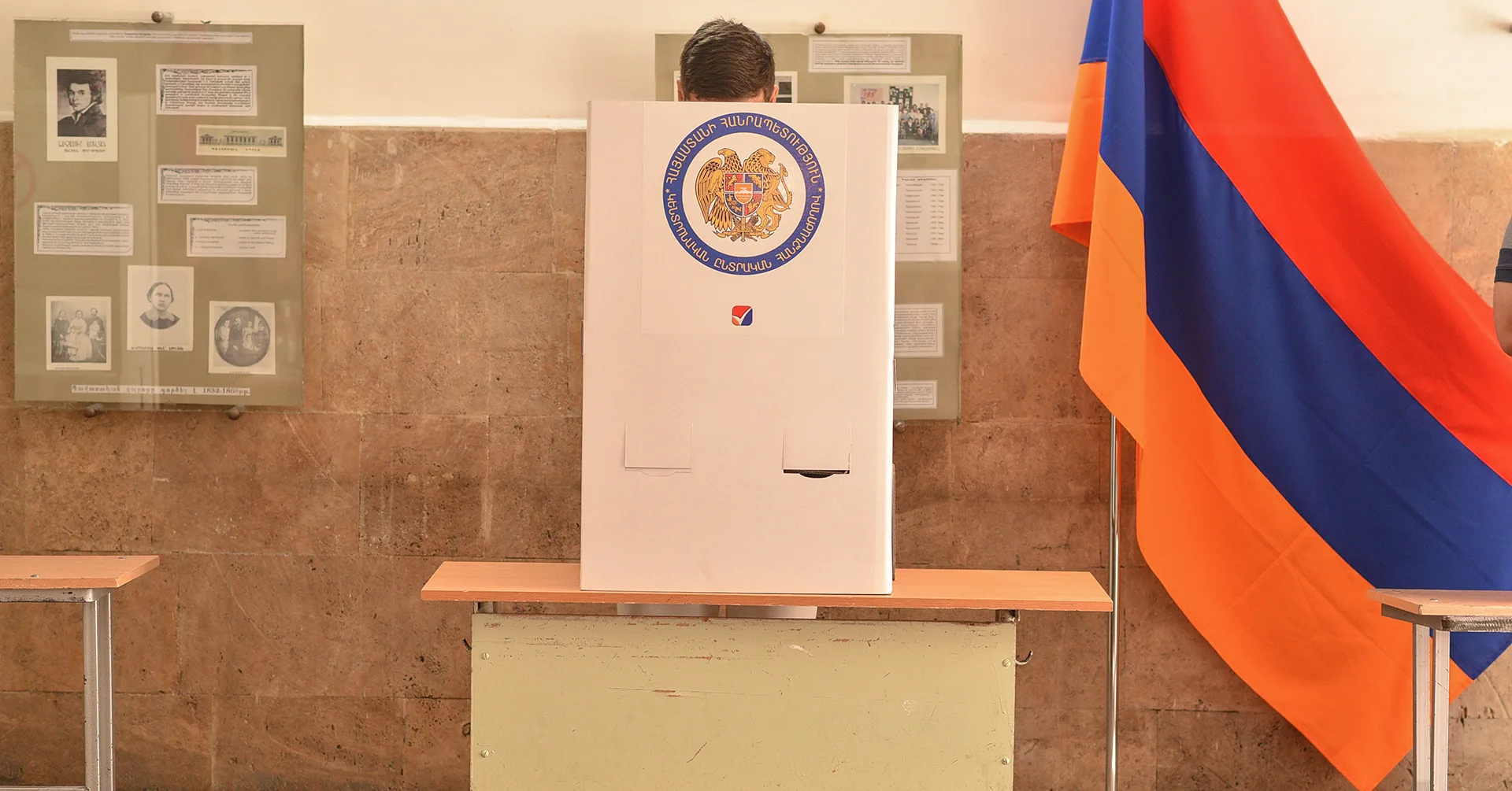
On June 7, Armenia will hold parliamentary elections. Several months before election day, Provereno began noticing fake stories targeting the country's prime minister, Nikol Pashinyan, who is seeking a third term as head of government. These stories appeared on Telegram channels, social networks, and in media outlets. In many cases, this disinformation — either in how it was produced or in the substance of the false claims — resembled campaigns that had previously been spread against Ukrainian President Volodymyr Zelenskyy, U.S. Vice President Kamala Harris, Moldovan President Maia Sandu, and, at the time, Péter Magyar, the leader of Hungary's opposition Tisza Party. Over time, however, the disinformation campaign began to develop differently from those earlier cases.
According to opinion polls, the ruling Civil Contract party has a strong chance of retaining power, with around 30% of voters prepared to support it. Among the political forces capable of challenging the ruling party are the Armenia Alliance bloc of former President Robert Kocharyan (whose faction is currently the second largest in parliament) and Strong Armenia, a party established last year and led by billionaire Samvel Karapetyan.
Kocharyan is a veteran of Armenian politics — the first president of the unrecognized Nagorno-Karabakh Republic (Republic of Artsakh) and President of Armenia from 1998 to 2008. He has consistently criticized Pashinyan and returned to active politics in 2021, ahead of the previous elections, when he founded his political bloc.
Karapetyan's career followed a different trajectory. In the late 1990s, he founded the Tashir Group in Russia, which now includes around 200 companies operating across a wide range of sectors, from construction and industry to finance and hospitality business. Forbes estimates Karapetyan's wealth at $4.1 billion. The current parliamentary elections in Armenia will be his first major foray into politics.
Focusing Attention on Oligarchs
According to investigative journalists, this turn in Karapetyan's life was not accidental. The Dossier Center, which obtained reports prepared by political consultants close to the Kremlin, writes that as early as 2023 one such document proposed finding a political force in Armenia "whose cooperation would help prevent a sharp turn by Yerevan toward Europe." The same document suggested focusing attention on "Russian oligarchs of Armenian origins."
In April 2026, Vladimir Putin hosted Pashinyan in Moscow. During the public portion of the meeting, the Russian president stated, "Elections are coming soon. What I would like to draw attention to in this regard is the following. <…> We would very much like all political parties and politicians to be able to take part in the election campaign. Some of them, as I understand, are currently imprisoned despite holding Russian passports."
Although in recent years several public critics of Pashinyan — from mayors and priests to bloggers and veterans of the Artsakh war — have become defendants in various criminal cases, Putin was referring specifically to Karapetyan. In June 2025, the businessman publicly supported the Armenian Apostolic Church in its conflict with the authorities, stating, "A small group of people, having forgotten the history of Armenia and the millennia-long history of the Armenian Church, has attacked the Armenian Church and the Armenian people. Since I have always stood with the Armenian Church and the Armenian people, I will take direct part in this. If politicians fail to achieve success, then we will participate in all of this in our own way." The billionaire was detained in Yerevan and charged with publicly calling for the seizure of power.
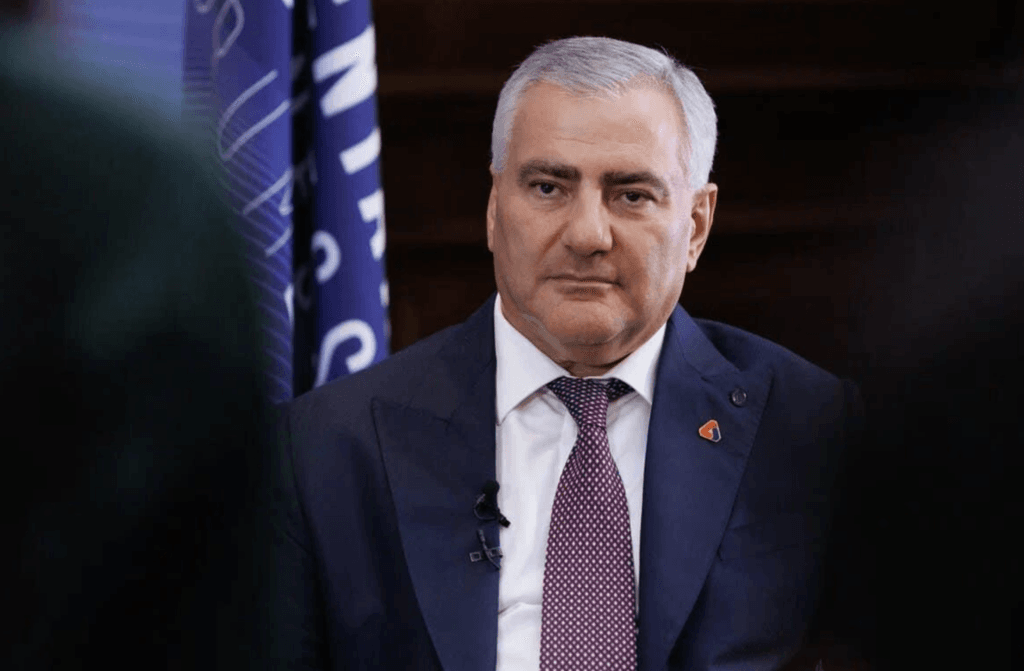
Shortly afterwards, according to Dossier, "a document outlining a plan to promote Karapetyan as a candidate was delivered to the head of one of the departments of the Russian Presidential Administration." One month later, the billionaire announced the creation of his own party, openly expressing his ambitions to become prime minister.
Karapetyan did not seem troubled by the fact that even in the event of electoral success he would be unable to take a seat in parliament or join the government. In addition to Armenian citizenship, the businessman holds Russian and Cypriot passports, while Armenia's Constitution does not allow members of parliament or ministers to hold dual citizenship. In 2026, Karapetyan stated that he would renounce all citizenships except Armenian in order to participate in the elections. However, even that will not help him. The Constitution requires that anyone seeking a parliamentary mandate must have renounced all other citizenships at least four years earlier and must have resided in Armenia throughout that period.
According to the Dossier Center, in August 2025, a month and a half after Karapetyan's arrest, a meeting took place at the Russian Presidential Administration attended by the Tashir Group Vice President Hayk Ignatyan and Viktor Soghomonyan, head of Kocharyan's office. The leaks indicate that after this meeting Kremlin-linked political consultants became actively involved in preparing the election campaigns of both candidates: conducting polling, drafting analytical memos, developing slogans, and so on.The Strong Armenia party was officially registered in December, and its electoral list was headed by the billionaire's nephew, Narek Karapetyan. In May 2026, he too was found to hold Russian citizenship, and Armenia's Investigative Committee opened a criminal case over the concealment of a second passport.
The apparent bet on Karapetyan is linked not only to his background and business success, but also to his ties with Russian security services. As The Insider reported, the businessman may have cooperated with intelligence agencies as far back as the late 1990s — in a leaked database, his place of employment was listed as a certain "FSB Information Center." A source in the Russian Ministry of Internal Affairs told the outlet that such designations were used for informal intelligence informants and foreign nationals operating under the service's supervision. Narek Karapetyan later objected to these claims, arguing that in Kaluga, where his uncle lived at the time, this unusual place of employment was indicated in the documents of almost everyone born in the 1960s and 1970s.
Karapetyan may also have provided services directly benefiting Putin. According to investigative journalists, in 2016 the billionaire received unsecured loans from Gazprom-affiliated entities to maintain a villa on the French Riviera. According to businessman Shalva Chigirinsky, the property was used by gymnast Alina Kabaeva, who is widely believed to be the mother of two sons of the Russian president.
Pashinyan Investigations
The work of Kremlin-linked political consultants during Armenia's parliamentary elections included, according to the leaked documents, the creation and spreading of fake stories aimed at discrediting the country's current authorities.
Targeted attacks on Pashinyan built according to the same pattern as the fake stories about Zelenskyy began long before the current election campaign. For example, in August 2025 pro-Kremlin Telegram channels and Russian-language Azerbaijani media outlets claimed that Armenian Prime Minister's long-time partner Anna Hakobyan had misappropriated $3.4 million in donations intended for treating sick children. Then, in September, they reported that the politician had purchased a $17 million mansion in Canada.
In both cases, the disinformation was legitimized using the same scheme: its authors created an English-language website masquerading as a news outlet and published a fake story there in the form of an investigative report accompanied by a video retelling. That video (sometimes coupled with a link to the original publication) was then distributed through Russian-language sources.
A slightly different — and in some respects more sophisticated — scheme was used to spread a fake story on a similar topic in 2026. In April, reports claimed that the prime minister's daughter, Mariam, had siphoned more than $80 million from the state budget through tenders and grants from several ministries, as well as through the "Learning Is Fashionable" programme associated with Hakobyan. The bloggers who circulated the claim cited an investigation by unnamed American journalists. However, it turned out that they were not referring to major reputable publications such as The New York Times or The Washington Post, but rather to the website vtforeignpolicy.com. Although the project presents itself as an independent, uncensored alternative foreign-policy media outlet, it is in fact part of a network of foreign websites involved in spreading Kremlin disinformation. The author of the article about Pashinyan's daughter, Brazilian writer Lucas Leiroz, also contributes, for example, to the website of the Valdai Club — a think tank and discussion forum closely aligned with the current Russian authorities.
Moreover, the article on the VT Foreign Policy website was itself merely a retelling of the original source material. The fake story first appeared two days earlier on the website of the Russian Foundation to Battle Injustice. The organization was founded in 2021 by the Wagner Group founder and businessman Yevgeny Prigozhin. Its Russian abbreviation — ФБР (FBR) — was deliberately chosen as a pun referencing the U.S. Federal Bureau of Investigation (FBI). Although the organization describes itself as a human rights group on its website, it is in reality actively involved in spreading Russian disinformation, according to findings by France's Agency for Monitoring and Protecting Against Foreign Digital Interference (VIGINUM).
But could these structures, in the case of Pashinyan's daughter, have conducted an investigation meeting journalistic standards and genuinely uncovered evidence of fraud? The Armenian fact-checking project CivilNet discovered that Mariam Pashinyan does indeed own half of a company called Atlix, which was mentioned in the allegations. However, open government registries do not list that legal entity as either a winner or even a participant in any public tenders.
Not Only Corruption
The fake investigation alleging embezzlement by Mariam Pashinyan was based not on documents attached to the publication, but on information supposedly provided by an unnamed informer. The same disinformation model had been used before. For example, in March, the Foundation to Battle Injustice claimed that it had received shocking information from a source within the Armenian Ministry of Health: many people who went missing during the fighting in Nagorno-Karabakh in 2020 and 2023 had in fact "fallen victim to an organized network trafficking organs to France." According to the unnamed source cited by the organization once founded by Prigozhin, the scheme was being carried out under the direct supervision of Prime Minister Nikol Pashinyan. Shortly afterwards, Leiroz published an article on the same subject on vtforeignpolicy.com. Both texts were shared by Telegram channels as well as Russian-language Azerbaijani media outlets.
The attention paid to the issue is unsurprising. The legacy of the Karabakh war remains one of the most sensitive issues in Armenian society today. Pashinyan has repeatedly engaged in public disputes with refugees who arrived in Armenia from Artsakh. They accused the prime minister of surrendering Karabakh, paying insufficient attention to their problems, and delaying the issuance of Armenian passports, which would allow displaced persons to participate in the elections and likely vote for the opposition. Pashinyan, in turn, described such accusations as unfounded.
The article about the "black-market organ traffickers" largely repeats similar publications previously circulated about Ukraine and relies entirely on statements from anonymous sources: a Ministry of Health official, a deputy chief physician at a Yerevan hospital allegedly involved in the scheme, and an employee of a French airport who supposedly witnessed the transportation of organs. Whether these individuals actually exist and whether they ever spoke to the authors of the article is a rhetorical question. The publication also cites comments by Irish journalist Chay Bowes, who has been cooperating with RT for many years and spreading disinformation, and political analyst Movses Ghazaryan, who regularly appears in Russian state media — from the Russian Defence Ministry-owned TV channel Zvezda to Moscow 24, which is controlled by the Moscow city government.
However, fake stories about the work of Pashinyan's cabinet were not legitimized solely through the Russian Foundation to Battle Injustice and the American website VT Foreign Policy. For example, in February, the Azerbaijani outlet Haqqin reported that the Armenian authorities were preparing to impose a complete ban on abortion in the country. The publication cited an article by the Turkish portal OdaTV. Its author, Okay Deprem, did not identify a source. However, CivilNet noted that just hours earlier, a video containing this disinformation — and bearing the CivilNet logo — had begun circulating on X, despite the fact that the outlet had never produced such a video. Armenia's Ministry of Health also denied that any tightening of abortion legislation was being considered. Moreover, OdaTV had previously come to Provereno's attention for spreadng fake stories about Zelenskyy.
Toward the end of February, Haqqin and several Telegram channels reported on another bill that the Armenian government was allegedly preparing. This time, according to the claims, the authorities intended to ban anti-Islamic statements, introduce optional school courses on the history and fundamentals of Islam, and establish prayer rooms for Muslims in public places. The source in this case was the Turkish newspaper Aydınlık, although no such bill had actually been announced, and no reputable media outlets reported on it. Aydınlık had previously published numerous "exclusives" directed against Zelenskyy and Ukraine, while corresponding articles based on anonymous sources and deepfakes were actively amplified by pro-Kremlin media.
The Second Front
The fake stories about Pashinyan in the run-up to the elections were not limited to allegations of corruption or controversial legislative initiatives. One of the main themes of the disinformation campaign was the claim that European countries — France in particular — were actively pushing Yerevan not simply to further worsen its already strained ties with Moscow, but to move toward open confrontation, potentially even war.
For example, in early March, several Telegram channels cited a video allegedly produced by the American Institute for the Study of War (ISW), known for publishing regular assessments of the war in Ukraine. According to those channels, "Following a successful election outcome, Pashinyan may lead Armenia into a military confrontation with Russia." The reports further claimed that after re-election, the prime minister planned to host a NATO base on Armenian territory, something that would "inevitably lead to conflict." However, ISW never published such a video. It first appeared on the pro-Russian channel Shkvarka News, which, according to Provereno, has repeatedly been used to plant disinformation.
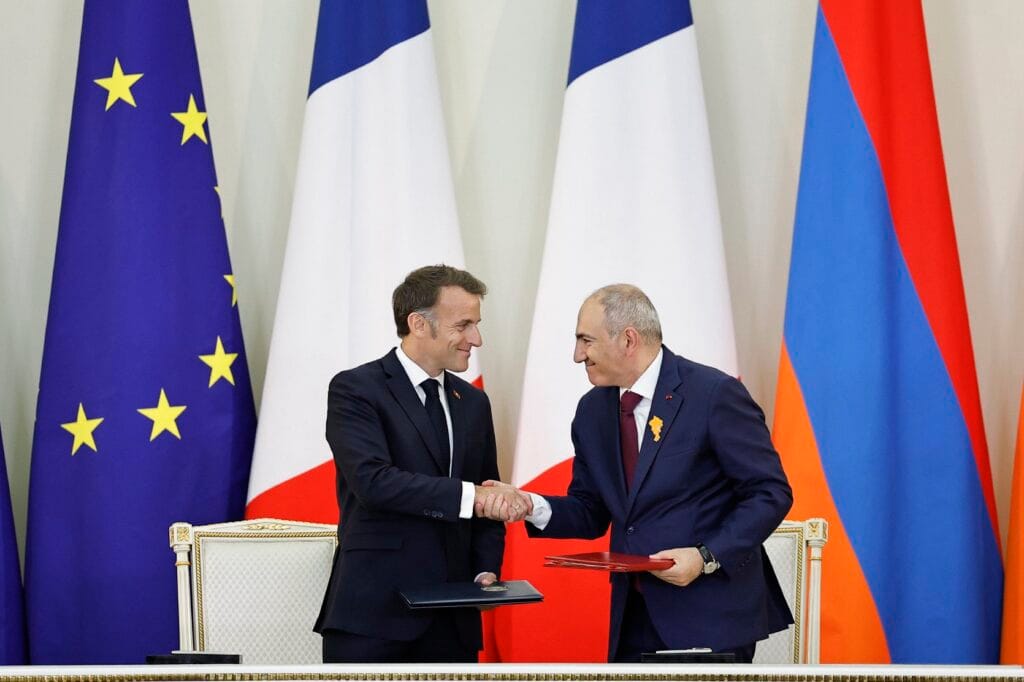
Several days later, shortly after Pashinyan's visit to Paris, pro-Kremlin Telegram channels circulated a set of three magazine covers allegedly belonging to the French publications Libération, Le Parisien, and ActuJ. The headlines claimed that French President Emmanuel Macron was pushing Armenia toward military conflict with Russia and had even promised French support should such a conflict occur. In reality, all three covers were fabricated. Since 2022, Provereno has analysed dozens of similar fake covers that first appeared in pro-Kremlin blogs.
Toward the end of the month, the Telegram channel Voyenny Obozrevatel ("Military Observer"), which regularly spreads disinformation, reported that the French authorities were not limiting themselves to rhetorical support. According to the channel, France had allocated more than €30 million for military exercises involving the Armenian army. Although the post cited no source and provided no details, an earlier publication by the same Shkvarka News channel revealed that the claim was based on an English-language video bearing the logo of the French radio station Europe 1. The station had never released such a video, and no allocation of French budget funds for support to Armenia's armed forces was recorded in official documents.
Khashlama, or A Mixed Bag
Other false claims spread through Russian-language Telegram channels are difficult to fit into a single coherent narrative. However, each of them either revolves around a specific news event that received extensive coverage in Armenian, Russian, and international media; appeals to universally resonant fears capable of attracting attention anywhere in the world; exploits issues particularly sensitive for Armenian society; or relies on techniques already tested by pro-Kremlin disinformation actors against Zelenskyy, Maia Sandu, and other politicians.
For example, in January, shortly after the U.S. operation to capture Nicolás Maduro in Venezuela, several channels reported that singer Cher, who has Armenian roots, had appealed to President Donald Trump with a proposal to neutralize another "dictator" —Pashinyan. As proof, they cited a video allegedly produced by the American entertainment outlet E! News. The video, however, contained neither an appeal from Cher herself nor even screenshots from her social media accounts, and E! News had never published such a report. Around the same time, another fake story spread about another celebrity's appeal to Trump: actress Pamela Anderson allegedly asked the American leader, following the Maduro case, to capture Zelenskyy.
Toward the end of the month, disinformation actors tried to exploit the theme of Armenian-Turkish relations in the same context. A video appeared on Telegram claiming that after Maduro's capture, Pashinyan's security had begun to be provided by members of Turkish President Recep Tayyip Erdoğan's security service. The alleged evidence consisted of a fabricated Bellingcat video which, notably, did not even formally cite any sources. Instead, it featured a completely invented statement attributed to Bellingcat founder Eliot Higgins.
The same Telegram channels also published fake stories about the alleged giveaway of national natural resources — a theme capable of provoking public outrage in virtually any country and one that has been actively used against the Ukrainian authorities as well. It was claimed that, through lobbying by Pashinyan, part of the Shikahogh State Reserve had been purchased by the investment company BlackRock, a frequent subject of numerous conspiracy theories. Once again, the foundation of the fake story was a fabricated Bellingcat video.
At roughly the same time, Anna Hakobyan also became a target. Telegram channels circulated a fake screenshot of an article allegedly published in Vogue magazine. According to the claim, the magazine had ranked Pashinyan's wife first among Europe's first ladies in terms of the cost of her wardrobe, with the average price of a single outfit allegedly reaching $500,000. Similar fake stories had previously been published about Sandu and — especially actively — about Ukrainian first lady Olena Zelenska.
When U.S. Vice President J.D. Vance arrived in Armenia in February on the first official visit of its kind in history, disinformation actors could hardly ignore such a significant event, particularly given that the conflict between the government and the Armenian Apostolic Church was simultaneously at its height. A week later, when criminal proceedings were initiated against Catholicos Garegin II, posts appeared on Telegram claiming that criminal charges had been filed at Vance's request during the visit. Although these claims circulated in the Russian-language segment of Telegram without any accompanying video, CivilNet reports that they originated from a fake video bearing the logo of CNN Türk that had been posted on X.
The exploitation of current events continued in March, amid the new war in the Middle East and regular Iranian attacks on various countries of the Persian Gulf. Alongside fake posts claiming that drones had destroyed Zelenskyy's luxury apartment in Dubai during strikes on the city, Telegram channels also reported supposed losses suffered by Pashinyan. In this case, however, the story did not concern real estate. Instead, it alleged that, because of the deteriorating security situation, an Armenian man who had allegedly laundered millions of dollars for the politician through cryptocurrency schemes had fled the United Arab Emirates. The "evidence" once again consisted of a fabricated video — this time supposedly produced by Politico.
At around the same time, reports emerged claiming that Pashinyan had sold an apartment he allegedly owned in Italy for €3 million, and that the buyer was his press secretary, Nazeli Baghdasaryan. The story was based on a fake video carrying the Euronews logo. Notably, a later fabricated video, also styled as a Euronews report and which went viral in the English-language segment of X, featured Baghdasaryan allegedly accusing her superior of sexual harassment.
In April, pro-Kremlin blogs began circulating claims that Pashinyan's re-election campaign was being supported by Ukrainian oligarchs who had allegedly donated €20 million to his election effort. The basis for this claim was a fabricated video bearing the logo of the previously mentioned French agency VIGINUM, which in reality is responsible for combating information attacks.
Nor were there any shortages of attempts to associate Pashinyan with one of the social groups that remain stigmatized in many societies. In May, only weeks before the election, Russian-language Azerbaijani media outlets and popular English-language bloggers on X reported that the Armenian prime minister had been HIV-positive since at least 2010. As evidence, they presented a video carrying the CivilNet logo together with a document supposedly originating from a prison hospital. According to the claim, the future head of government had contracted HIV shortly after being sentenced in 2010 to seven years in prison on charges of organizing mass unrest (Pashinyan was ultimately released under an amnesty after serving a year and a half). Both the document and the video itself were fabricated.
Perhaps the claim that achieved the widest circulation in Russian-language media was the allegation that Pashinyan's grandfather had collaborated with the Nazis during the Second World War. Ahead of Victory Day celebrations — which the Armenian prime minister did not attend in Moscow — the claim was repeatedly discussed by participants in political talk shows on Russian federal television channels and amplified by major Telegram channels. Although they relied on genuine archival documents as evidence, Armenian fact-checkers pointed out that the individual named in those documents and Pashinyan's grandfather had different patronymics and different years of birth. In this respect, the Armenian prime minister joined a fairly large group of European politicians who have become the subjects of similar publications in Russian media, often without any factual basis. Usually, such reports choose to ignore explaining how wrongdoings of a person's ancestor are supposed to determine the actions of their descendants.
An Elusive Audience
It is not difficult to see that most of the examples of disinformation directed against Pashinyan ahead of the parliamentary elections share a common structure. They are based on short videos in which a news item is accompanied by the logo of a major foreign publication — or, less frequently, an Armenian one. According to data from the Bot Blocker project, which tracks such videos on X, by early May 2026 at least 343 videos related to the upcoming Armenian elections had appeared. The project claims that this predominantly English-language disinformation was spread through the Matryoshka network, which had already been deployed ahead of elections in other countries.
At the same time, many of these false claims can hardly be described as viral — at least not in the Russian-language segment of Telegram. Among the examples discussed above, only a handful attracted even several tens of thousands of views. Far greater attention was drawn to false claims supported by fabricated websites or publications on intermediary platforms such as VT Foreign Policy. This allowed disinformation to be further amplified by unethical media outlets and bloggers. Even if they had not been directly involved in the original operation, they could cite, for example, "American journalists" and thereby create an additional illusion of credibility.
Moreover, CivilNet analysed at least a dozen other fake videos which, according to TGStat data, either never appeared at all in Russian-language Telegram channels or appeared only in such small blogs that the service does not index them. Here are several examples:
- Azerbaijani businessmen had become majority shareholders in Armenia's largest companies under Pashinyan.
- The number of victims of the Armenian Genocide would be reduced by 40% in new history textbooks for Armenian schools.
- A group of Armenian political consultants had travelled to France to exchange experience on methods of falsifying local election results.
- More than 70% of Pashinyan's fellow party members had obtained French citizenship.
- According to the European Statistical Office (Eurostat), Pashinyan's approval rating had fallen to a record low because of his foreign policy.
- Pashinyan's wife had a secret affair with the son of an Azerbaijani billionaire.
- Pashinyan was forcing Armenian businesspeople to finance his election campaign.
- The U.S. Republican Party had lost more than one million voters of Armenian origin following Vance's visit to Armenia.
Judging by the links used by the project's colleagues in their analyses, these fake stories were published by various English-language users on X. Some were obvious bots, while others "came back to life" after years of inactivity — that is, they had most likely been hacked or hijacked from their original owners. However, most of those tweets are no longer available, presumably because their authors were suspended. Had those posts gone viral, the fake stories would have remained visible in reposts and quotations by other users. Yet we were unable to find such traces either in Russian or in English.
One possible explanation might be that this reflects a deliberate strategy on the part of the creators and distributors of the disinformation: perhaps they were targeting voters directly and therefore intentionally seeded fake stories through Armenian-language channels and blogs. However, this hypothesis is contradicted by at least two arguments.
First, Provereno's experience shows that even in such cases large pro-Kremlin Telegram channels — which are also interested in generating views and engagement — do not ignore the topic and likewise share the fabricated videos. This has happened not only in cases where some subscribers could potentially be voters (for example, Moldovan voters), but also in situations where the sole objective of the publications was to (mis)inform audiences — for instance, in relation to Péter Magyar, the leader of Hungary's Tisza Party, which won the parliamentary elections in April.
Second, Armenian fact-checkers themselves openly acknowledge that they do not observe widespread circulation of the fake stories they debunk in the domestic information space. "Despite the intensive information flow ahead of the upcoming parliamentary elections in Armenia… fake news was mainly spread through Russian-language Telegram channels. It generally did not appear in Armenian Telegram channels and had limited impact on the Armenian media environment," CivilNet writes.
Another hypothesis is that the creators of the fake stories were in fact targeting the Armenian diaspora, particularly since some of the fabricated videos achieved a certain degree of virality in the English-language segment of X. Documents prepared by Kremlin-linked political consultants and obtained by journalists also lend support to this interpretation. According to the leaks, there were plans to create a network of media outlets aimed at Armenian diasporas in Russia, the United States, France, Iran, and other countries, and to use those media platforms to "undermine trust in the Armenian authorities."
However, this hypothesis — or at least the effectiveness of the original plan — is also undermined by two counterarguments. First, genuinely viral foreign-language fake stories that accumulated hundreds of thousands or millions of views constitute only a tiny minority of the cases identified by fact-checkers and analysts. Likewise, the media projects mentioned in the leaked documents never became truly influential — at least judging by the number of views and audience engagement on their social media pages. Second, and more importantly, polling stations have long since ceased to operate outside Armenia. Voting electronically from abroad is permitted only for diplomatic personnel, members of their families, and several other very small categories of voters. Of course, some members of the diaspora may travel to their historical homeland on election day. However, determining how many of them did so because they encountered one of these fake stories in their social media feed would be extremely difficult.
***
In recent years, disinformation campaigns with Russian roots have become a constant feature of election campaigns. Yet the Armenian case is clearly different from those observed in the United States, Moldova, or Hungary. The most viral fakes appeared almost a year before election day, while dozens of new ones were launched over the following months, nearly all of them failing to attract comparable attention.
In some respects, this may be connected to Russia's broader involvement in the election. Citing leaked documents, the Dossier Center reported that Kremlin-linked political consultants assisting the opposition were unable for a long time to settle on a single candidate and vacillated between Kocharyan and Karapetyan. In the run-up to election day, Moscow banned imports of numerous Armenian goods. At the same time, Reuters reported that Russia had sent 100,000 Russian Armenians to participate in the elections. The figure itself does not sound particularly plausible, and at the time of writing there had been no published evidence of systematic vote-buying on the scale documented during Moldova's elections. Putin, together with other leaders of the Eurasian Economic Union, called for a referendum in Armenia on whether the country should join the European Union or remain in the EAEU. Three days later, the Russian president telephoned Pashinyan to congratulate him on his birthday and also to discuss that proposal.
It is possible that the unusual nature of this disinformation campaign can be explained by the alignment of forces in the election race. For months, Pashinyan's party maintained a substantial lead in the polls. Under those circumstances, the creators of the fake stories may have had little realistic prospect beyond generating informational noise. Moreover, the recent presidential elections in the United States and Moldova, as well as the parliamentary elections in Hungary, were essentially binary contests: either a Kremlin-friendly candidate would win, or their opponent would. The situation in Armenia is different.
Translated with the assistance of AI and reviewed by Provereno.
Cover photo: elections.am
Если вы обнаружили орфографическую или грамматическую ошибку, пожалуйста, сообщите нам об этом, выделив текст с ошибкой и нажав Ctrl+Enter.