

Читать по-русски
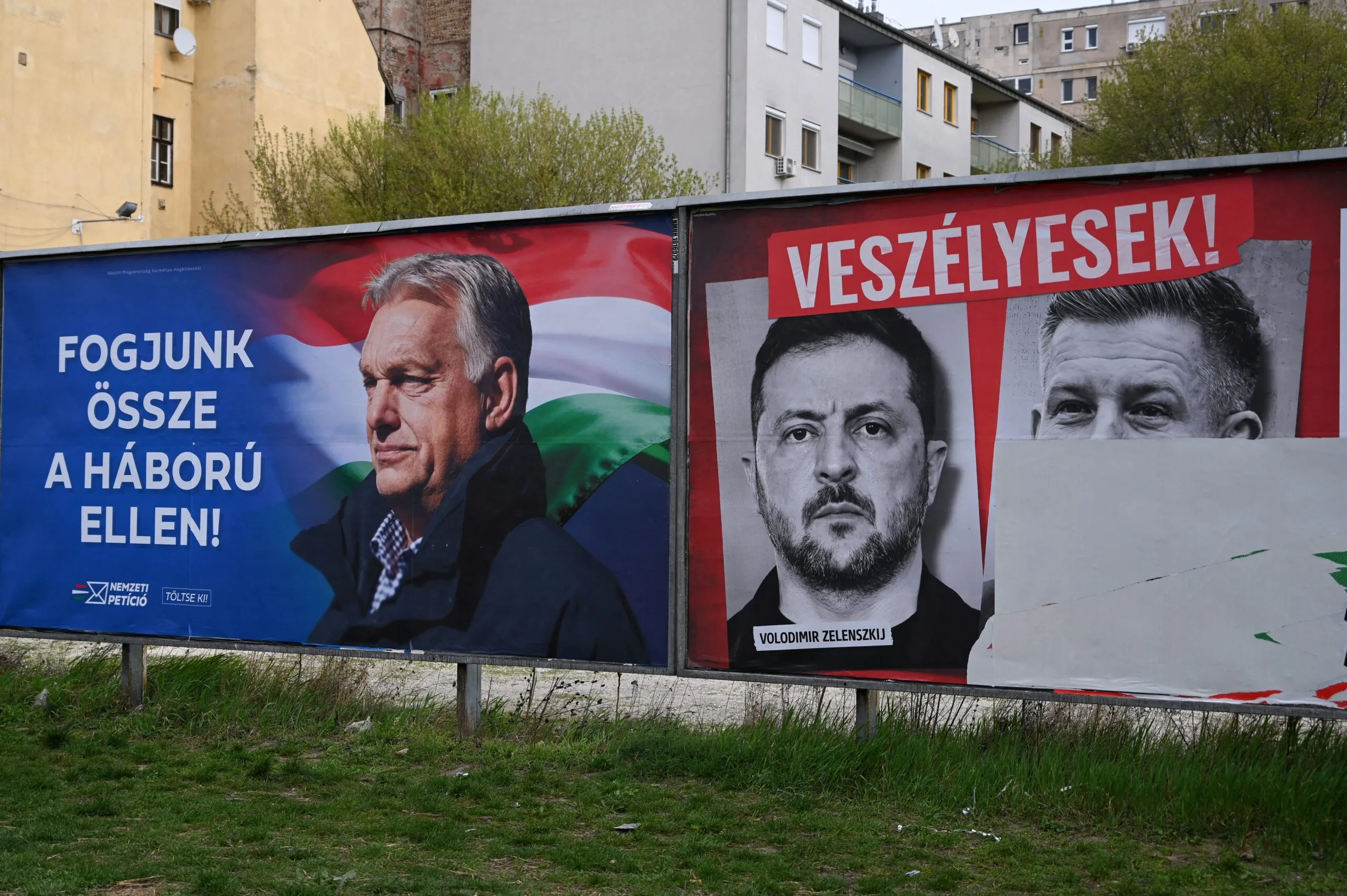
On April 12, 2026, Hungary will hold parliamentary elections. For the first time in 16 years, the ruling Fidesz party, led by Prime Minister Viktor Orbán, faces a real risk of losing its parliamentary majority. The tense campaign has been accompanied by a wave of fake stories targeting the opposition. Although published in Hungarian or English, these narratives bear a striking resemblance—in both structure and method—to those that have circulated in pro-Kremlin Telegram channels over the past several years, particularly in campaigns aimed against Ukraine. In recent weeks, Russian-language disinformation outlets have also produced a notable volume of content about the Hungarian elections. At first glance, the subject might seem unlikely to interest an average Russian reader—but the framing shifts once Ukrainians are cast as villains, allegedly scheming to harm Hungary. Provereno examines the falsehoods that have circulated both within Hungary and beyond its borders ahead of the vote.
In early 2024, a scandal erupted in Hungary when it emerged that the previous year, President Katalin Novák and Justice Minister Judit Varga had signed a pardon for Endre Kónya, the former deputy director of a children’s home in the town of Bicske. The institution’s director had been a pedophile, and Kónya had spent years helping him evade accountability. When the case finally came to light, Kónya was sentenced to eight years in prison. The case had been highly publicized at the time, so news of the pardon provoked widespread shock. Both Novák and Varga ultimately resigned.
Soon afterward, Varga’s former husband—lawyer and Fidesz member Péter Magyar—entered the scene. He publicly accused the party of making the two women scapegoats, arguing that they had merely carried out orders while those who had actually made the decision to grant the pardon (and, more broadly, those who make the country’s key decisions) shifted the blame onto others. Magyar announced that he was leaving Fidesz and launching a campaign against the corruption that, in his words, had permeated Hungarian society “thanks to” the ruling party. Later that same year, he took the helm of the previously little-known Tisza party, which quickly began to gain voter support and, within two years, emerged as a genuine threat to Fidesz. According to a poll conducted by the independent firm Medián in March 2026, Tisza led Fidesz by 20 percentage points among eligible voters in Hungary. At the same time, surveys by pro-government institutions showed Fidesz ahead—though even in those polls, the gap between the two parties was narrow, at 46 percent to 40 percent. Both sides accuse each other of manipulating data.
All of this, unsurprisingly, has caused concern for Viktor Orbán, who has led Hungary’s government continuously since 2010. Until now, his most formidable opponent had been the united opposition coalition in 2022. Even then, however, that coalition enjoyed significantly less public support than Tisza does today — Fidesz led even in polls conducted by independent institutions. In 2026, Orbán’s position appears far more precarious.
In an effort to shift public sentiment, the Hungarian prime minister turned to Russian political consultants, according to a March 2026 investigation by the independent Central European outlet VSquare, citing sources in European intelligence services. According to the article, the Russian side of the operation is being handled by the Social Design Agency. In 2024, journalists from the Dossier Center established that the organization’s work is overseen by Sergey Kiriyenko, First Deputy Chief of Staff of the Russian Presidential Administration.
The Social Design Agency has previously appeared in investigations into large-scale disinformation campaigns in Europe; it has been reported to have operated during elections in Moldova and possibly Romania. In Hungary, Russian specialists are believed to be publishing fabricated opinion polls, manipulating TikTok and Facebook algorithms, and carrying out information attacks against Magyar and his allies.
It is not possible to state with complete certainty that Russian operatives are behind the disinformation campaign in Hungary. Nevertheless, it is difficult to ignore how closely the false narratives circulating in this campaign resemble those we have analyzed before.
Curious Coincidences
On the one hand, the disinformation cases recently identified by Hungarian fact-checkers revolve around the same themes as earlier Russian-language campaigns—corruption in Ukraine and Europe, wartime recruitment, the Epstein files, and so on—albeit reframed through Hungarian realities and domestic concerns. On the other hand, these falsehoods are often seeded through purpose-built websites, which are abandoned almost immediately afterward and designed to mimic both real and fictitious media outlets. This tactic is a hallmark of pro-Kremlin disinformation efforts, lending an air of credibility to fabricated claims. Since April 2024, for instance, fake media sites have repeatedly promoted stories about luxury properties, allegedly purchased around the world by Ukrainian President Volodymyr Zelensky. In July 2025, a similar method was used to legitimize a false claim that Moldovan President Maia Sandu had spent $400,000 on sperm from gay celebrities.
There is no shortage of examples following this pattern in Hungary’s media space. As early as January, a website posing as the “European Center for Investigative Journalism”—an organization that does not exist—published an article alleging that Tisza party leader Péter Magyar had used a 2024 humanitarian trip to Ukraine as cover for transporting $16.7 million in cash to the United Kingdom on behalf of individuals close to Zelensky. The Hungarian outlet Telex later debunked the claim in detail.
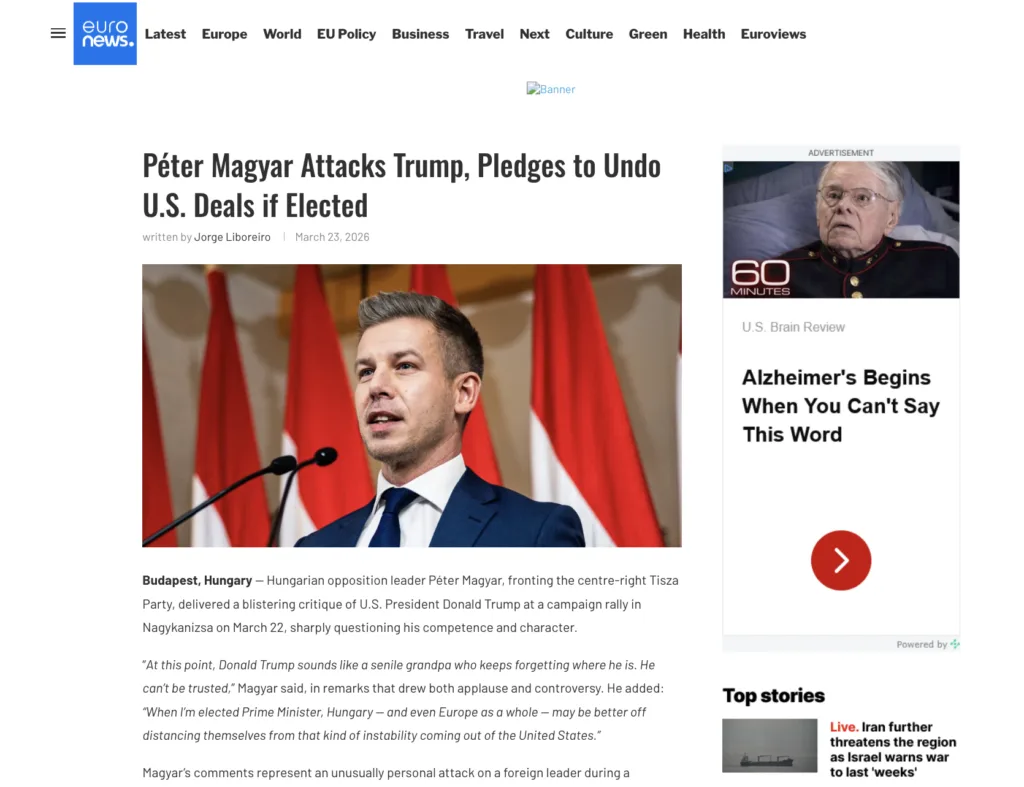
In March, a cloned Euronews website published a fabricated story claiming that Magyar had mocked U.S. President Donald Trump at a rally and promised to terminate bilateral agreements with the United States if he won the election. Euronews’ Hungarian editorial team stated that the article was fake and that Magyar had made no such statements.
Soon afterward, the fictitious English-language “news site” 24veritas.com reported that Ágnes Forsthoffer, a vice president of the Tisza party, had been an accomplice of Jeffrey Epstein. According to the claim, a hotel she allegedly owned on Lake Balaton had served as a transit point for trafficking girls and young women from Central and Eastern Europe to the United States on behalf of the financier. At the same time, the same sensational “story” appeared on the Hungarian-language site napihirek24.hu, which is likewise fictitious. Fact-checkers from the Hungarian project Lakmusz traced the forgery back to a real letter found in Epstein’s archive, which had been manipulated to form the basis of the fabricated “investigation.”
Another Hungarian-language website, hirekhub24.hu, published an article accusing Romulusz Ruszin-Szendi—a former chief of staff of the Hungarian armed forces who had joined Tisza—and his cousin of recruiting Hungarians to fight in the Russia–Ukraine war. In this case as well, Lakmusz demonstrated that the portal had been created specifically to disseminate the claim, which is unsupported by any credible sources.
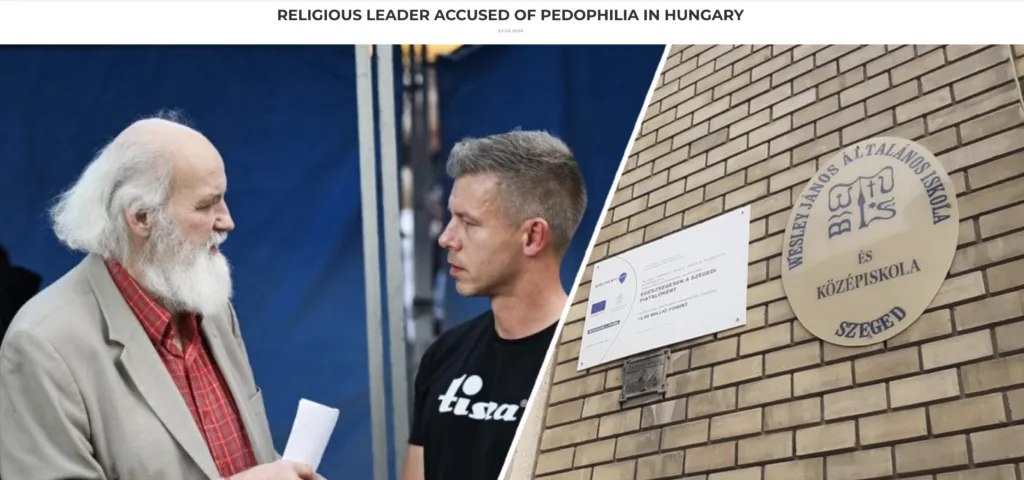
Yet another Hungarian-language website (which also had an English version), oknyomozoriport.hu, published a piece in February targeting Gábor Iványi, head of the Hungarian Evangelical Fellowship. The anonymous author accused Iványi of pedophilia, while repeatedly noting that Magyar supported him and regarded him as a spiritual leader. The Fellowship later issued a statement saying it “fully dissociates itself from the absurd and malicious defamatory claims published on a discrediting fake website” and promised to pursue legal action to defend its reputation.
All of the websites mentioned in this section were registered in 2026 (although some articles were backdated). None provides any information about editorial staff; several have already gone offline or ceased updating shortly after publishing their false claims. In some cases, Hungarian investigators found that these “investigations” were promoted via Facebook ads using pages that were likely hacked and repurposed — a tactic that Provereno has previously documented.
Provereno also noted that Hirekhub24 and Napihirek24 are hosted on the same IP address by the Hungarian provider DotRoll and use identical DNS servers. Four of the five analyzed sites— Hirekhub24, 24veritas, Euronews.us.com, and Oknyomozoriport — used the same paid WordPress theme, Soledad, with an almost identical set of plugins. Hirekhub24, Euronews.us.com, and 24veritas were all registered within a single week. Taken together, these indicators suggest that, despite differences in hosting infrastructure, the sites may be controlled by a single operator.
But the so-called “European Center for Investigative Journalism” stands apart from this network. It was launched earlier, in January, and its domain, ecij.org, has existed for years. According to the Internet Archive, it hosted an online-auctions listing aggregator in the mid-2000s, a Chinese adult video site in the 2010s, and was later put up for sale again. Its registrar and hosting also differ from those used by the rest of the network. By the time the other sites were registered, ecij.org had already been blocked by its hosting provider.
Notably, the authors of these fake Hungarian-language sites occasionally made a telling mistake: they rendered names in the wrong order—for example, “Romulusz Ruszin-Szendi” instead of “Ruszin-Szendi Romulusz.” In Hungarian, the family name always precedes the given name; reversing the order suggests that the text was originally written in a foreign language and then translated by machine.
Two in One
At the same time, familiar anti-Ukrainian falsehoods in Russian-language media began to be reframed within an unfamiliar Hungarian context. Disinformation about relations between the two countries had appeared on pro-Kremlin platforms before, but in recent weeks its volume has increased markedly. One might assume these fakes are aimed at influencing Russian-speaking voters in Hungary, but there are only a few thousand of them in the country, and the Russian-speaking diaspora is small overall. It is far more likely that the authors are simply capitalizing on the news cycle — especially given the abundance of mutual grievances between Kyiv and Budapest.
Relations between Ukraine and Hungary began to deteriorate during Orbán’s second term. In September 2017, then–Ukrainian President Petro Poroshenko signed a new law "On Education", requiring all state schools to switch to Ukrainian as the language of instruction from the fifth grade onward. Although the law was primarily aimed at curbing the use of Russian, it also affected the ethnic Hungarian minority in Transcarpathia, which at the time numbered around 130,000 people. From the outset of his political career, Orbán has made support for Hungarian communities abroad a central priority, emphasizing the importance of preserving education in the native language. It was in response to this law that Budapest first began to speak of blocking Ukraine’s accession to the European Union. Kyiv, for its part, objected to Hungary’s mass issuance of passports to ethnic Hungarians in Ukraine — by 2015, at least 100,000 Ukrainian citizens had received them.
The full-scale Russian invasion of Ukraine briefly softened tensions. Hungary became an important transit country for Ukrainian refugees, and Orbán formally condemned Russian aggression. Yet the strain soon returned. Orbán avoided direct criticism of the Kremlin (and even made two official visits to Moscow), refused to supply Ukraine with weapons, consistently opposed European sanctions against Russia, and blocked EU financial assistance to Kyiv.
The conflict reached a breaking point over the Druzhba oil pipeline. In August 2025, Ukrainian forces struck the Unecha distribution station in Russia’s Bryansk region, temporarily halting operations. More than 90 percent of Hungary’s oil imports come from Russia, and Druzhba is the country’s primary supply route; as a result, Fidesz representatives in the European Parliament described the Ukrainian strike as “a military attack on an EU member state.” Oil flows were later restored, but on January 27, 2026, the pipeline was struck by Russia on Ukrainian territory. It has not operated since. Kyiv maintains that repairs take time; Budapest argues that Ukraine is deliberately delaying them. The two countries’ leaders have traded public barbs, accusations, and threats. Orbán has even said he fears for his personal safety and that of his family.
Against this backdrop, the Hungarian prime minister has built his campaign on fears of war. Its principal antagonist is the president of Ukraine, portrayed as seeking to deprive Hungarians of money and energy while dragging the country into a conflict with Russia. Péter Magyar, leader of the opposition Tisza party, is cast in this narrative as a puppet of both Volodymyr Zelensky and the European Union.
A similar narrative has been promoted by Russian propaganda for nearly four years. The authors of pro-Kremlin disinformation tirelessly attempt to persuade their audience that ordinary Europeans do not, in fact, support Ukraine and have grown weary of constant demands for aid. Fabricated stories have claimed, for example, that Ukrainian athletes in Italy were supposedly segregated from others at the Olympics because of their “conflict-prone” behavior; that a sign in Luxembourg airport suggested Ukrainians greet others by saying “Give!”; and that mainstream French media accuse Zelensky of deliberately prolonging the war. The “Hungarian” fakes that have appeared ahead of the elections not only extend this narrative logically but also fit neatly into the context of strained relations between Budapest and Kyiv.
Most of these “Hungarian” fakes targeting Russian speakers fall into two categories: those that depict Ukrainians as trying to harm Hungarians, and those that portray Hungarians as unafraid to stand their ground—and even to retaliate.
Hungarians Have Reasons to Dislike Ukraine
The creators of fakes in the first category generally appeal to simple, easily digestible themes for Russian-speaking audiences—ones that do not require any deep understanding of the complexities of Hungarian–Ukrainian relations.
On March 17, 2026, for example, the Telegram channel Voennyi Obozrevatel posted a claim that “Ukrainian phone scammers had stolen at least €8 billion from residents of Hungary.” The post alleged that the perpetrators had collected money “to strengthen the country’s air defenses in response to military threats from Zelensky.” It drew 120,000 views. No source was cited, but later that same day a similar post appeared on the channel Shaman Rakhu — this time with a much smaller figure (€8 million)—accompanied by a video bearing the Euronews logo.
Provereno reviewed Euronews’ verified accounts on Instagram, TikTok, X, and Facebook, as well as its official website and YouTube channel, and found no such report. The video itself also differs markedly from the outlet’s authentic content: it consists entirely of still images, with the story conveyed through subtitles. In genuine Euronews videos, subtitles are formatted differently, and the channel typically uses white text on a blue background only in its opening slate. The logo placement also does not match.
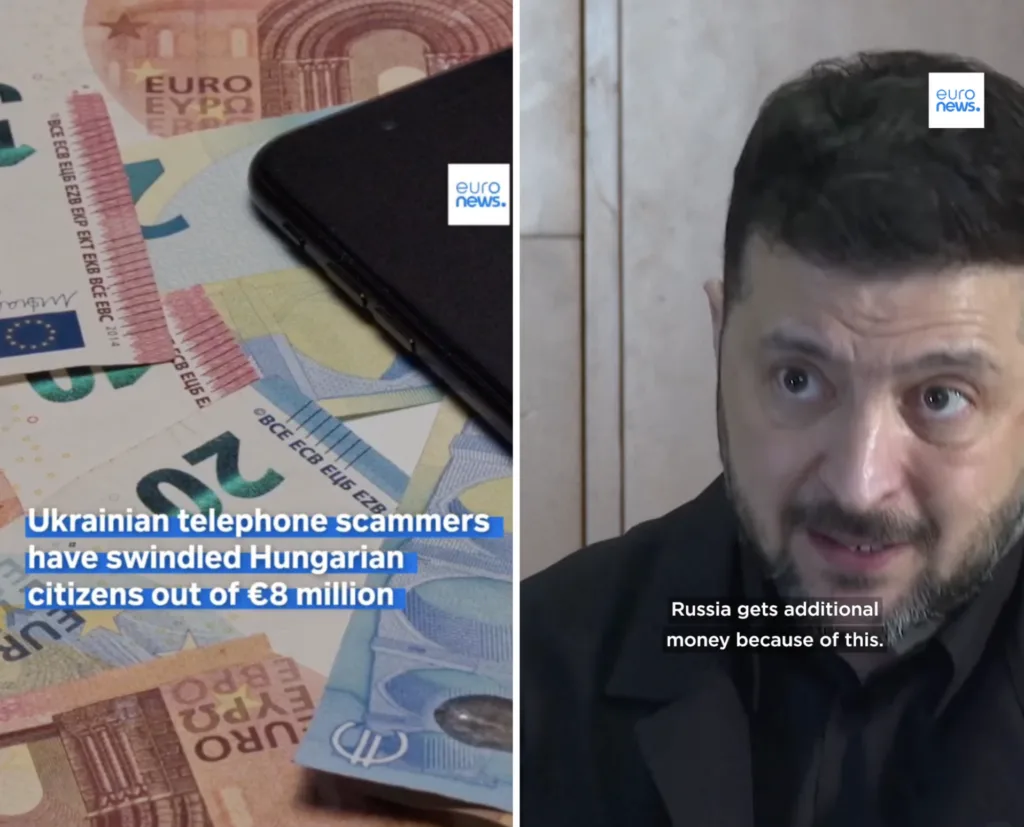
As for the story itself, it has no factual basis. Provereno found no similar reports in reputable Hungarian media. The claim appears to be loosely inspired by a real incident reported a week earlier, when Hungarian police arrested two Ukrainian citizens on suspicion of phone fraud. There was no mention of fundraising for air defenses; the suspects had posed as bank employees. The amount involved was also far smaller than claimed in the Telegram posts—15 million forints (about €39,000), according to police.
Provereno has encountered this pattern repeatedly: a text-based fake is first circulated on Telegram, followed by a video version on other channels, presented as a report from a well-known media outlet. Notably, in earlier cases the original source was also Voennyi Obozrevatel.
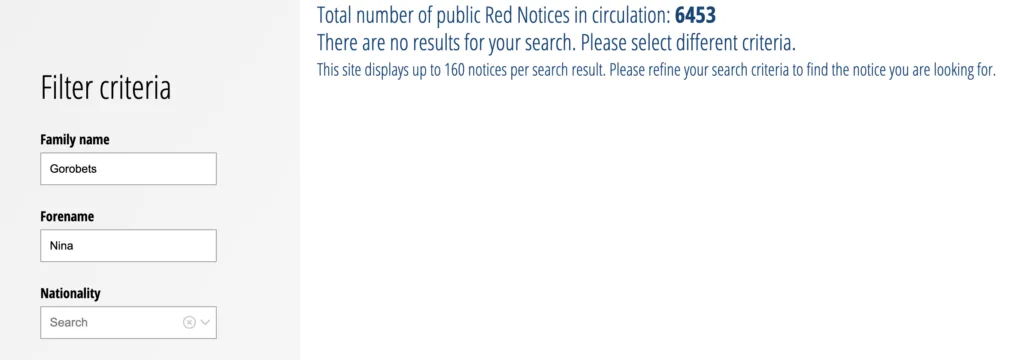
Another story that spread in March 2026 claimed that Hungarian authorities had detained a “Zelensky HIV squad” at the Romanian border—a group of 12 Ukrainian women allegedly tasked by Ukraine’s Security Service with carrying out a “sexual sabotage operation” by infecting as many Hungarians as possible with HIV. A post about the “HIV squad” on the Telegram channel Odessa Za Pobedu! garnered 72,000 views and featured a video with the logo of the U.S.-based Institute for the Study of War (ISW). The video identified one of the supposed participants as “artist and former Femen activist Nina Gorobets,” allegedly wanted by Interpol for knowingly infecting men with HIV.
Femen, a Ukrainian feminist movement known for provocative topless protests, is largely anonymous; only a handful of current and former activists are publicly identified, and Gorobets is not among them. Nor does her name appear in Interpol’s public database of wanted persons.
The video also quotes an “ISW expert,” Justin Young, who allegedly claims that Ukraine“in a league of its own when it comes to telephone scams and unprotected sex", and warns Hungarians against having sex with Ukrainian women without condoms. Young is a real ISW analyst—but he specializes in Russia, not Ukraine, and none of his published work touches on topics related to sex or HIV.
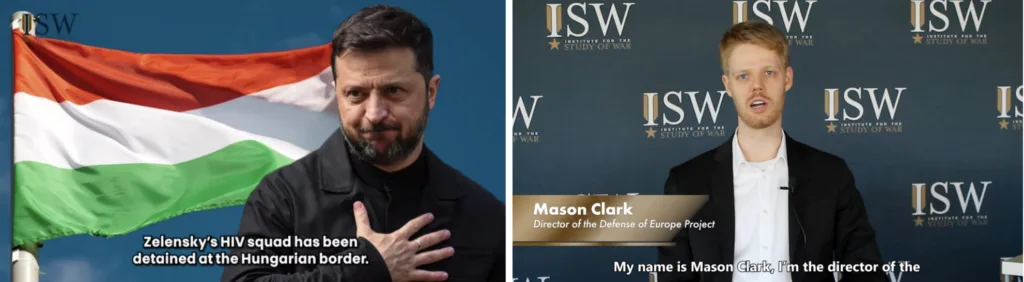
Provereno reviewed ISW’s verified accounts on X, YouTube, Instagram, and Facebook, as well as its official website, and found no trace of such a video or report. The clip itself again diverges from ISW’s typical output: it is a montage of still images set to music, with information delivered entirely through subtitles. In authentic ISW videos, subtitles are secondary, experts appear on camera, the font differs, and there is no logo in the upper-left corner.
The earliest known post featuring this fabricated video appeared on the Telegram channel Gagauzskaya Respublika, which has previously been noted for spreading false claims about Ukraine.
Another fake video about Hungarian–Ukrainian relations has been attributed to Wired. The clip claims that “a flash mob is taking place in the Ukrainian segment of TikTok—Ukrainians are burning Hungarian flags.” A post featuring the video on the Shaman Rakhu channel drew 70,000 views.
As in previous cases, the video cites a real expert—French political scientist Christophe Jaffrelot—who is purported to have said: “It’s not just that Volodymyr Zelensky hates Viktor Orbán. Ukrainians as a whole hate Hungarians and were simply waiting for the right moment to express it.” The problem is that Jaffrelot specializes in South Asia, particularly India and Pakistan, not Eastern Europe. Moreover, his name does not appear on Wired’s website at all.
Provereno reviewed the magazine’s accounts on Instagram, Facebook, TikTok, and YouTube and found no such video. The outlet’s authentic videos are also formatted differently: they do not feature a Wired logo, and each clip identifies its author at the outset, with narration provided by the journalist.
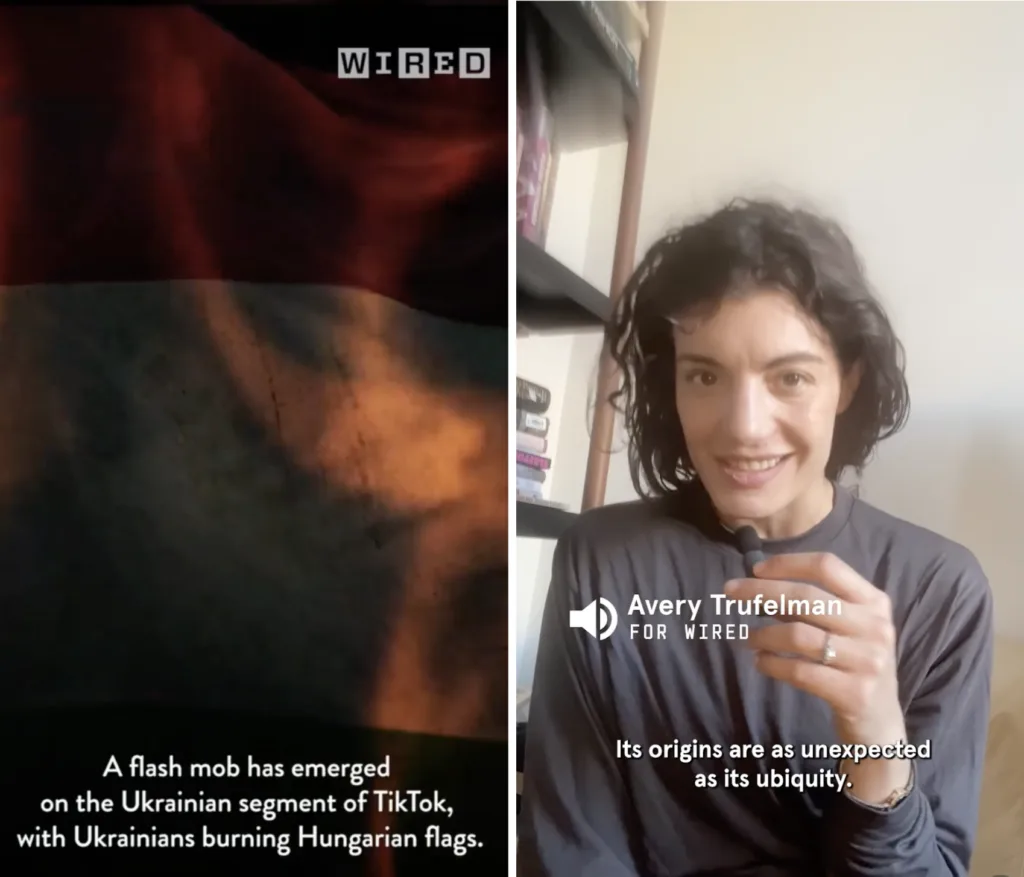
Provereno also found no evidence on TikTok of any recent viral videos showing Ukrainians burning Hungarian flags.
The first post featuring the falsified Wired video appeared on the Telegram channel Respublika Odessa, which has previously been identified by Provereno as a recurring source of disinformation.
Hungarians Can Stand Up for Themselves
One of the most widely circulated fakes about Hungarian–Ukrainian relations in March 2026 claimed that Hungarians, outraged by Zelensky’s threats against Orbán, had thrown a pig’s head at the gates of the Ukrainian embassy in Budapest. In total, posts on the subject amassed more than 2 million views on Telegram, with the most popular appearing on channels such as Plokhie Novosti 18+ (199,000), NE.CAXAP (159,000), Zloy Pruf (148,000), and Dyadya Slava (131,000).
Severed pig heads are sometimes used in acts of intimidation by Islamophobic and antisemitic groups, and such incidents typically attract media attention and police investigations. No such incident, however, occurred in Budapest in March 2026: reputable Hungarian outlets did not report it, nor was it mentioned on the Ukrainian embassy’s official Facebook page.
The photograph offered as “evidence” also raises obvious doubts. It appears to have been taken in summer or early autumn—the embassy gates are cast in the shadow of dense foliage. In March, Budapest’s trees are still bare, making such shadows impossible.
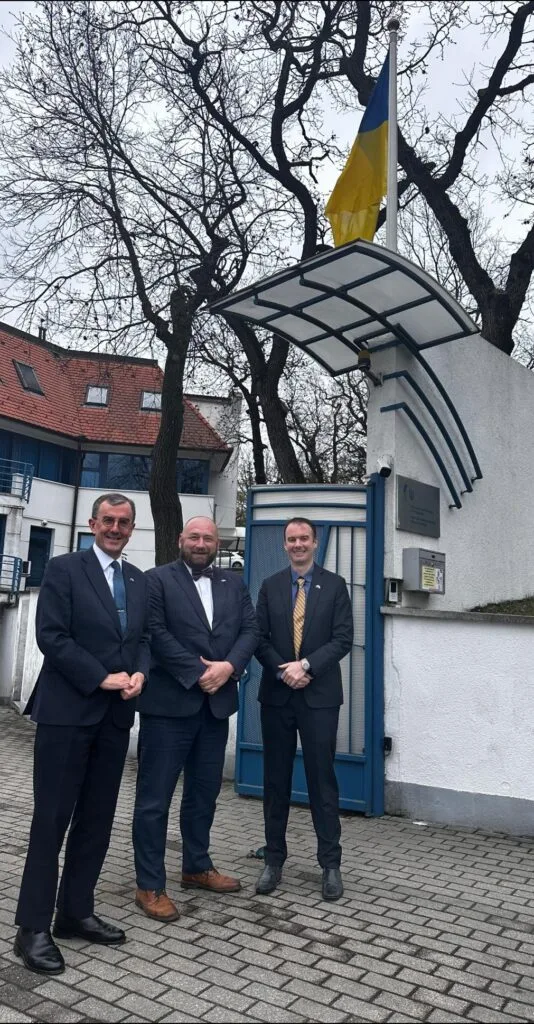
While examining images of the Ukrainian embassy in Budapest, Provereno identified a Google Street View panorama from September 2025. The pattern of shadows in that image perfectly matches those in the viral photo.
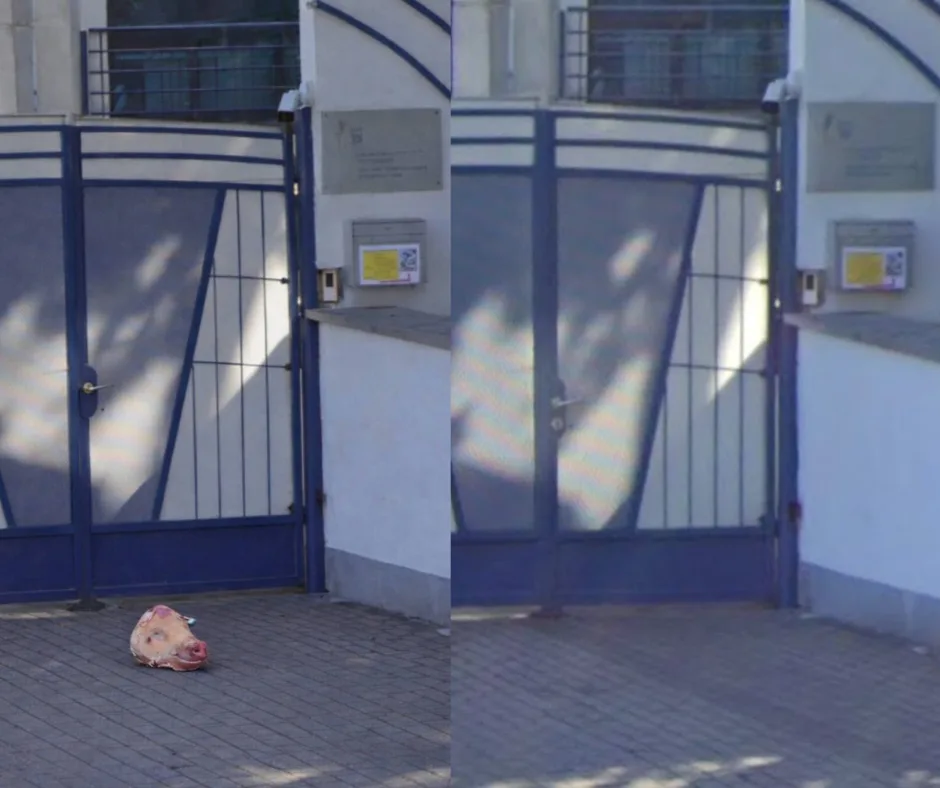
It appears that this image served as the basis for the fake: its contrast and sharpness were adjusted (Google Street View images become blurry at high zoom), and a pig’s head was digitally added. The earliest post featuring the doctored image that Provereno could identify appeared on the Telegram channel Srochno, Seichas, where it received 95,000 views.
Notably, a similar tactic was used nearly two years ago, when disinformation campaigns accused Ukrainians of placing a pig’s head at a mosque in Berlin.
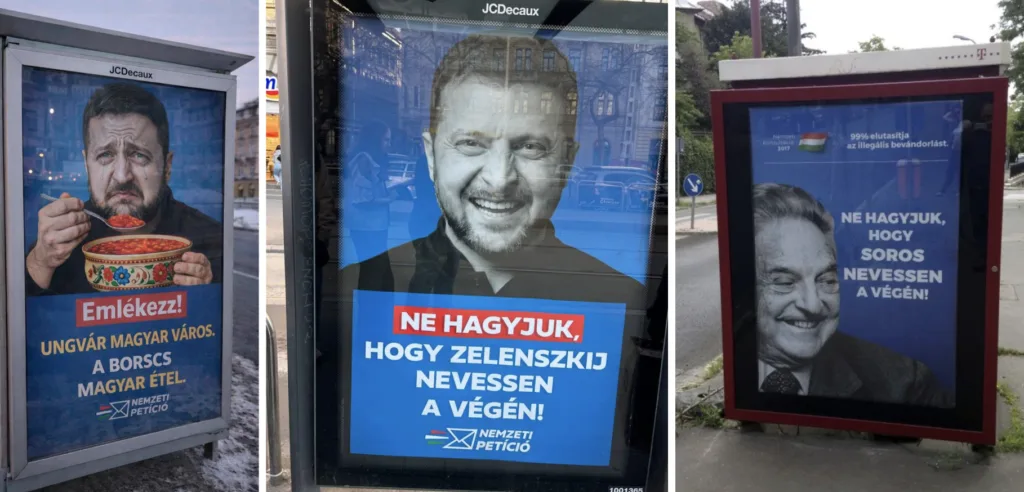
Another widely circulated fake features a poster with an AI-generated portrait of Zelensky and the caption: “Remember! Ungvár is a Hungarian city. Borscht is a Hungarian dish.” Ungvár is the Hungarian name for Uzhhorod, which, until 1919, was part of Austria-Hungary along with much of present-day Transcarpathia. After the empire’s collapse, it became part of Czechoslovakia; in the late 1930s it was reannexed by Hungary; in 1944 it was taken by the Red Army; and after World War II, Uzhhorod and the surrounding region were incorporated into the Ukrainian Soviet Socialist Republic. Posts featuring this image appeared on Telegram channels such as Vestnik Shevtsova (128,000 views), Golos Mordora (53,000), Svezhesti (42,000), and Nasha Rasha (26,000), as well as on Facebook and Instagram.
Across all of these posts, the same photograph is used—a common sign of fabrication. In the background, the street is covered in snow. Yet in Budapest this year, snowfalls occurred only in January; by the time the image of the poster began circulating online, it had long since melted. The forgery was debunked even by the Hungarian government’s press office, whose comment was published on March 17 by the Russian state news agency RIA Novosti.
The claim proved easy to believe, in part because Budapest действительно is saturated with propaganda posters featuring Zelensky. Some of them are AI-generated, others use a slightly altered photograph of the Ukrainian president, alongside the slogan, “We will not let Zelensky have the last laugh.” Notably, this slogan was already used during the 2022 election campaign—only then the posters featured the Hungarian-born American financier and philanthropist George Soros, who for several electoral cycles had served as the central antagonist in Fidesz’s messaging. By the time of the last election, however, Soros was already 91; in 2023, he stepped back from managing the Open Society Foundations, handing control to his son Alex. An aging retiree, it seems, no longer made for a compelling enemy. The pro-government propaganda machine briefly attempted to transfer that role to Soros’s heir, but he proved, if anything, too young and too little known. The leader of a neighboring country at war—one with which Budapest has fraught relations — fit the role far better.
***
In 2025, Provereno examined disinformation campaigns that emerged ahead of Moldova’s presidential election. At the time, the fingerprints of the usual suspects were everywhere: the same templates, themes, methods, and channels used in false narratives about Zelensky and Ukraine were deployed to seed and amplify misleading claims. There was no need to reinvent the wheel—especially given the sizable Russian-speaking electorate in Moldova.
Half a year later, the situation in Hungary is different. Even if Russian “troll factories” are not directly involved in the disinformation campaign against Orbán’s opponents, the source of inspiration is obvious: the fabricated stories bear a striking resemblance to earlier falsehoods about Zelensky, Maia Sandu, and other pro-European politicians in the region.
At the same time, whoever may be creating and disseminating pro-Orbán fakes for a domestic Hungarian audience, pro-Kremlin media have not missed the opportunity to publish an entire series of fabricated stories about Ukraine within this context. The Olympics, the war in the Middle East, elections in Hungary — with a bit of imagination, almost anything can be turned into an anti-Ukrainian fake.
Translated with the assistance of AI and reviewed by the author.
Cover photo: Attila Kisbenedek / AFP
Further reading:
- Орбана на-ду-ли: в соцсетях расходится поддельное фото политика с наращённым животом
- Delfi. «"Я звоню по просьбе Алишера". Как Лавров лоббировал снятие санкций с семьи Усманова»
- NYT. A Hidden Russian Hand in Hungary’s Election? Actually, It’s Quite Open
- «Дождь». «Кооператив Орбана: как Венгрия идет путем России и где остановится»
- «Новая газета Европа». «Лучший друг Кремля Почему Орбан сделал выбор в пользу Путина? И как Россия пытается привести союзника к победе в ключевой избирательной гонке?»
Если вы обнаружили орфографическую или грамматическую ошибку, пожалуйста, сообщите нам об этом, выделив текст с ошибкой и нажав Ctrl+Enter.